

The art of crafting your own herbal tea blends connects us to centuries of healing traditions while offering complete control over what goes into our daily wellness rituals. Creating apothecary-style tea blends transforms simple dried herbs into personalized therapeutic experiences that nourish both body and spirit.
Whether you're seeking deep relaxation after a stressful day, immune support during seasonal transitions, or simply want to craft a signature blend that reflects your unique taste preferences, this comprehensive guide will walk you through everything you need to know about creating professional-quality herbal tea blends at home.
Understanding the Foundation of Herbal Tea Blending
Every successful herbal tea blend follows a strategic three-part structure that balances therapeutic benefits with delightful flavor profiles. This framework ensures your finished blend delivers both wellness support and sensory satisfaction.
Base Herbs form the foundation of your blend, typically comprising 60% of your total mixture. These primary ingredients provide the dominant therapeutic action and flavor profile. Popular base herbs include chamomile for relaxation, peppermint for digestion, or nettle for mineral support. Your base herb choice determines the overall character and health benefits of your finished blend.
Secondary Herbs make up about 30% of your blend and work synergistically with your base ingredient. These complementary botanicals enhance the primary herb's benefits while adding complexity to the flavor profile. For example, if you're using chamomile as your base for a calming blend, you might add lavender and lemon balm as secondary herbs to deepen the relaxation benefits.
Accent Ingredients comprise the final 10% and include spices, dried fruits, flowers, or citrus peels that brighten the overall taste and create sophisticated flavor layers. These finishing touches transform a simple herbal tea into an artisanal experience.
Essential Tools and Ingredients for Successful Blending
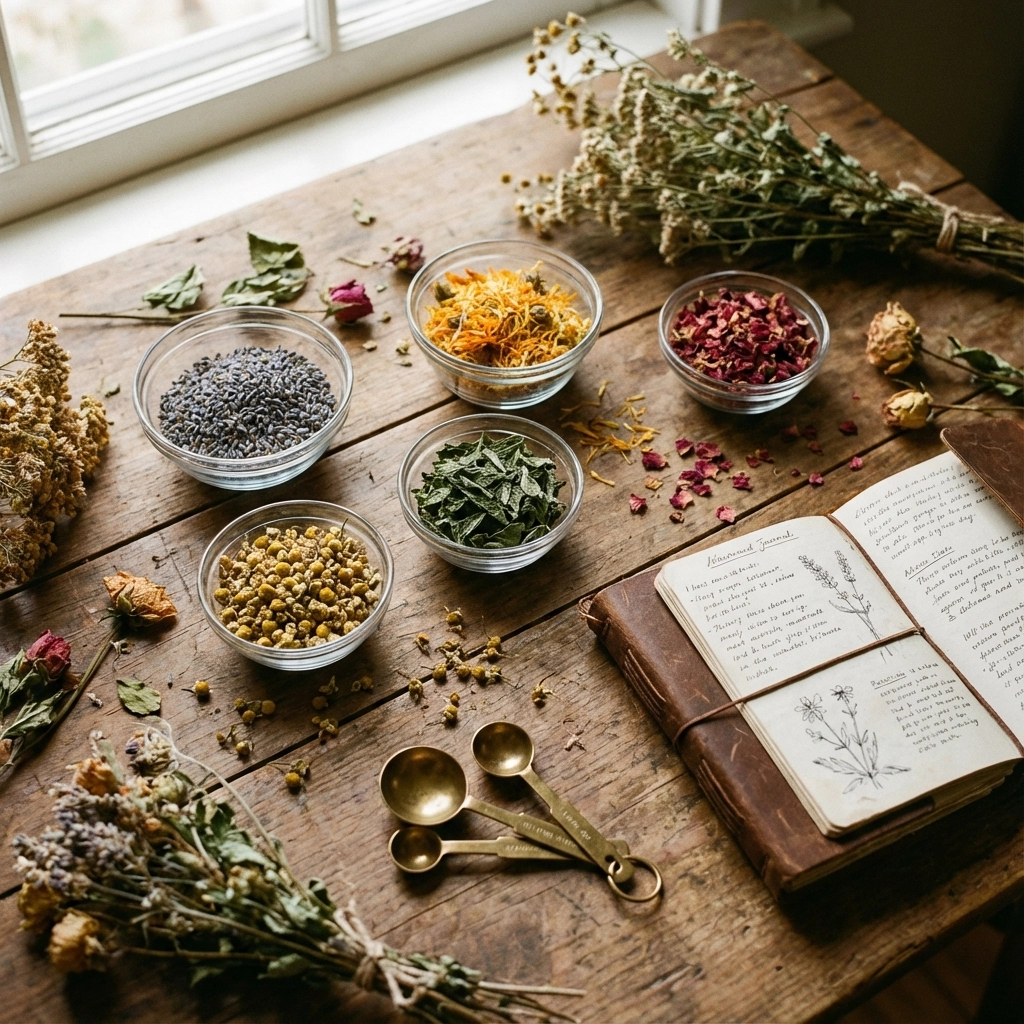
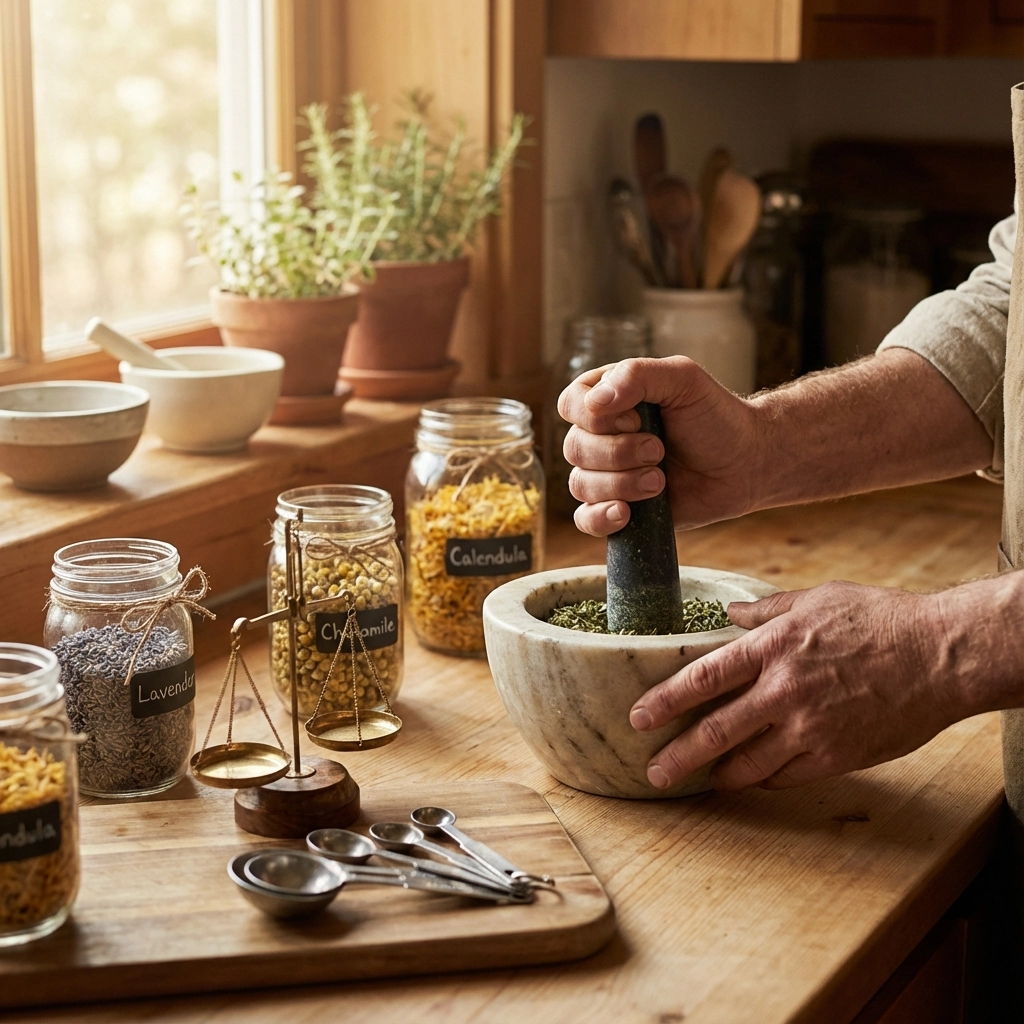
Before diving into your first blend, gather the right tools and quality ingredients. A kitchen scale provides precision when measuring herbs by weight, while measuring spoons work well for volume-based blending. A mortar and pestle helps create uniform herb sizes, ensuring even steeping and consistent flavor extraction.
Source your herbs from reputable suppliers who offer organic, ethically harvested botanicals. Look for herbs that are properly dried, vibrant in color, and aromatic when gently crushed. Store your herb collection in airtight glass containers away from direct sunlight to preserve potency and flavor.
Quality matters significantly in herbal blending. Fresh, properly stored herbs maintain their therapeutic compounds and essential oils, resulting in more effective and flavorful teas. Always check expiration dates and replace herbs that have lost their aroma or changed color.
The Step-by-Step Blending Process
Step 1: Define Your Intention
Start by clarifying the purpose of your blend. Are you creating a morning energizer, an evening wind-down ritual, or targeted support for specific wellness goals? This intention guides every subsequent ingredient choice and ensures your finished blend serves its intended purpose effectively.
Step 2: Select Your Base Herb
Choose a primary herb that aligns with your blend's intention. Consider both therapeutic properties and flavor preferences. Research each herb's traditional uses and any precautions before incorporating them into your blend.
Step 3: Choose Complementary Herbs
Add one to two secondary herbs that enhance your base ingredient's benefits. Look for herbs with synergistic properties that work together rather than competing for attention. Start with small amounts and adjust ratios based on taste and desired therapeutic effects.
Step 4: Add Accent Ingredients
Introduce aromatic spices, dried fruits, or flowers to create complexity and appeal. Popular accent ingredients include cinnamon bark for warmth, dried orange peel for brightness, or rose petals for floral notes. Remember that less is often more with potent accent ingredients.
Step 5: Test Your Blend
Before finalizing your recipe, test the aroma by crushing a small amount of the dry blend in your palm. The scent should be appealing and balanced, without any single ingredient overwhelming the others. Adjust ratios if needed.
Step 6: Document Your Recipe
Keep detailed notes of your exact measurements and ratios. This documentation allows you to replicate successful blends and learn from less successful experiments. Include brewing notes and tasting observations for future reference.
Measurement Methods and Ratios
Professional herbalists use two primary measurement approaches: volume-based and weight-based methods. Volume measurements using tablespoons offer accessibility and simplicity, perfect for home blenders just starting their journey. The "parts" system allows easy scaling - if your recipe calls for 3 parts chamomile to 1 part lavender, you can use tablespoons for small batches or cups for larger quantities.
Weight-based measurements provide greater precision and consistency, especially important when creating multiple batches of the same blend. Use a kitchen scale to measure herbs in grams or ounces. This method proves particularly valuable for delicate herbs or potent ingredients where small variations significantly impact the final product.
Start with these basic ratios and adjust based on your taste preferences and the potency of your specific herbs:
- 60% Base herb (primary therapeutic ingredient)
- 30% Secondary herbs (complementary botanicals)
- 10% Accent ingredients (spices, fruits, flowers)
Proper Preparation Techniques
Before blending, ensure all herbs are similar in size for even steeping and consistent flavor extraction. Large pieces like rose hips or dried apple may need gentle crushing with a mortar and pestle. Cut and sifted herbs work best for blending, as they provide uniform pieces that steep evenly.
When working with different plant parts - leaves, flowers, roots, and barks - consider their varying extraction requirements. Delicate leaves and flowers release their compounds quickly, while tougher roots and barks require longer steeping times. Balance these differences in your blend composition or prepare brewing instructions that account for varying extraction needs.
Brewing Guidelines for Optimal Results
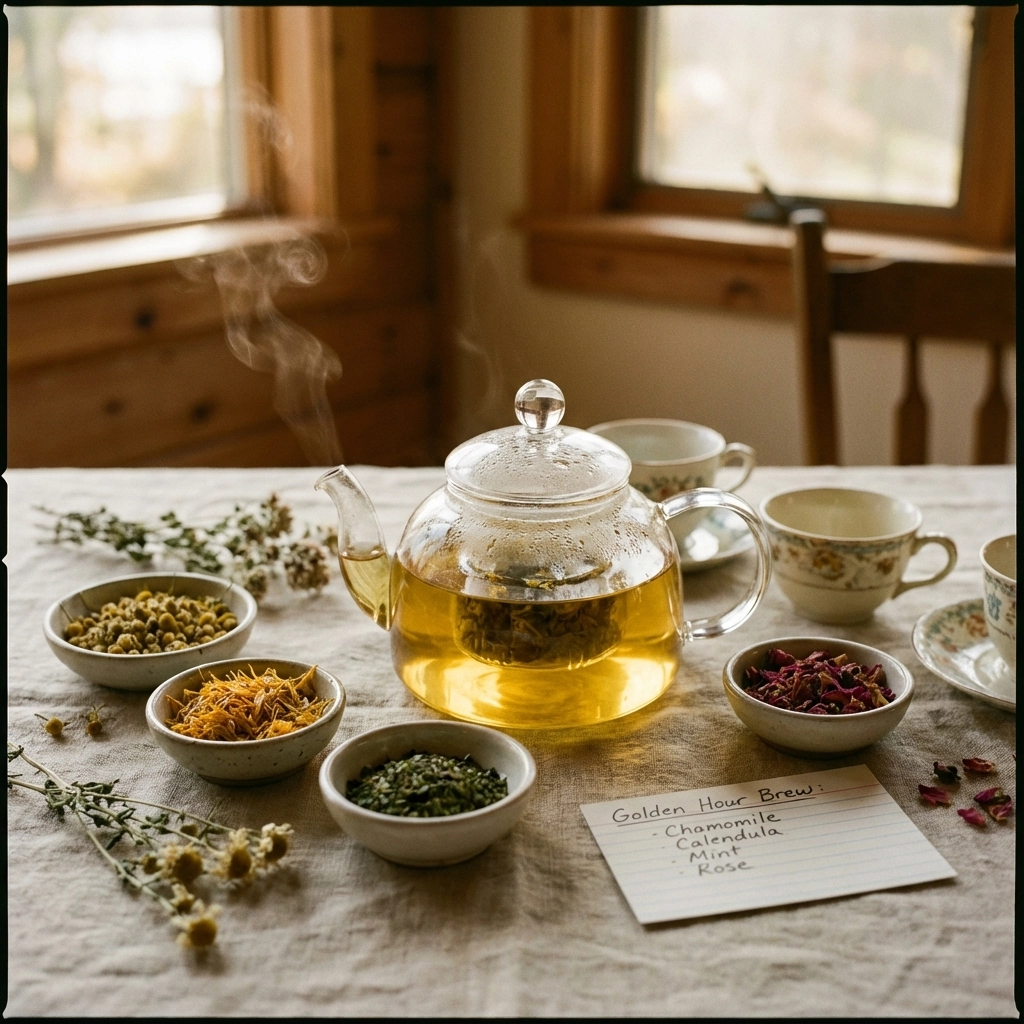
Proper brewing technique maximizes both flavor and therapeutic benefits from your custom blends. Use approximately one tablespoon of dried herb blend per eight ounces of filtered water. When measuring by weight, aim for 0.5 to 5 grams of herbs per cup, depending on the potency of your specific ingredients.
Water temperature matters significantly. Most herbal teas benefit from full boiling water (212°F), unlike delicate green or white teas that require cooler temperatures. Pour the hot water over your herbs and allow proper steeping time for full extraction.
Steeping duration varies based on your blend's composition. Leaf and flower-based blends typically require 15-20 minutes of steeping, while blends containing roots or barks benefit from 20-30 minutes. For maximum therapeutic benefit, some herbalists recommend steeping up to an hour, creating a strong infusion with concentrated active compounds.
Cover your tea during steeping to prevent essential oils from evaporating and to maintain optimal temperature throughout the extraction process.
Storage and Shelf Life Considerations
Proper storage preserves your blend's potency, flavor, and therapeutic value. Transfer finished blends to airtight glass containers with tight-fitting lids. Label each jar with the blend name, ingredients, ratios, and creation date for easy reference.
Store your tea blends in a cool, dark location away from direct sunlight, heat sources, and moisture. A pantry or cabinet works well for most herbal blends. Properly stored herbal blends typically maintain quality for 12-18 months, though potency gradually decreases over time.
Check your stored blends periodically for signs of degradation. Fresh, properly stored herbal teas maintain their color, aroma, and flavor. Discard any blends that develop off-odors, visible mold, or significant color changes.
Advanced Blending Tips for Success
As your skills develop, experiment with more complex formulations and sophisticated flavor profiles. Consider seasonal ingredients and how different herbs interact throughout the year. Spring blends might feature cleansing herbs like dandelion and nettle, while winter blends could emphasize warming spices and immune-supporting herbs.
Keep detailed tasting notes for each blend you create. Record not just the recipe, but also observations about flavor development, therapeutic effects, and any adjustments you'd make for future batches. This documentation becomes invaluable as you develop your personal blending style.
Start simple with two or three ingredients before progressing to more complex formulations. Master the basics of proportion and balance before attempting intricate multi-herb blends. Each successful simple blend builds your understanding of how different herbs interact and complement each other.
Creating apothecary-style tea blends connects us to traditional healing wisdom while allowing complete customization of our daily wellness rituals. With practice and attention to quality ingredients, you'll develop signature blends that support your health goals while providing genuine sensory pleasure. Remember that the journey of discovery and refinement is as rewarding as the perfect cup of tea that results from your efforts.
0 comments