

1. Objective
This document provides technical specifications and procedural steps for the pour-over brewing method. The method is used to extract coffee solids via manual filtration, emphasizing precision and sensory observation.
2. Equipment Specifications
Standardize the following equipment for consistent results:
- Brewer: Cone-shaped dripper (e.g., Hario V60 or Chemex).
- Filter: Compatible paper or cloth filter.
- Kettle: Gooseneck kettle for flow control.
- Scale: Digital scale with 0.1g precision.
- Timer: Standard digital timer.
- Grinder: Burr grinder capable of medium-fine settings.
- Water: Filtered water with 50-150 ppm mineral content.
3. Product Selection
Two specific blends from The Filtered Philter are recommended for this method due to their solubility and flavor profiles:
3.1 6 Bean Blend
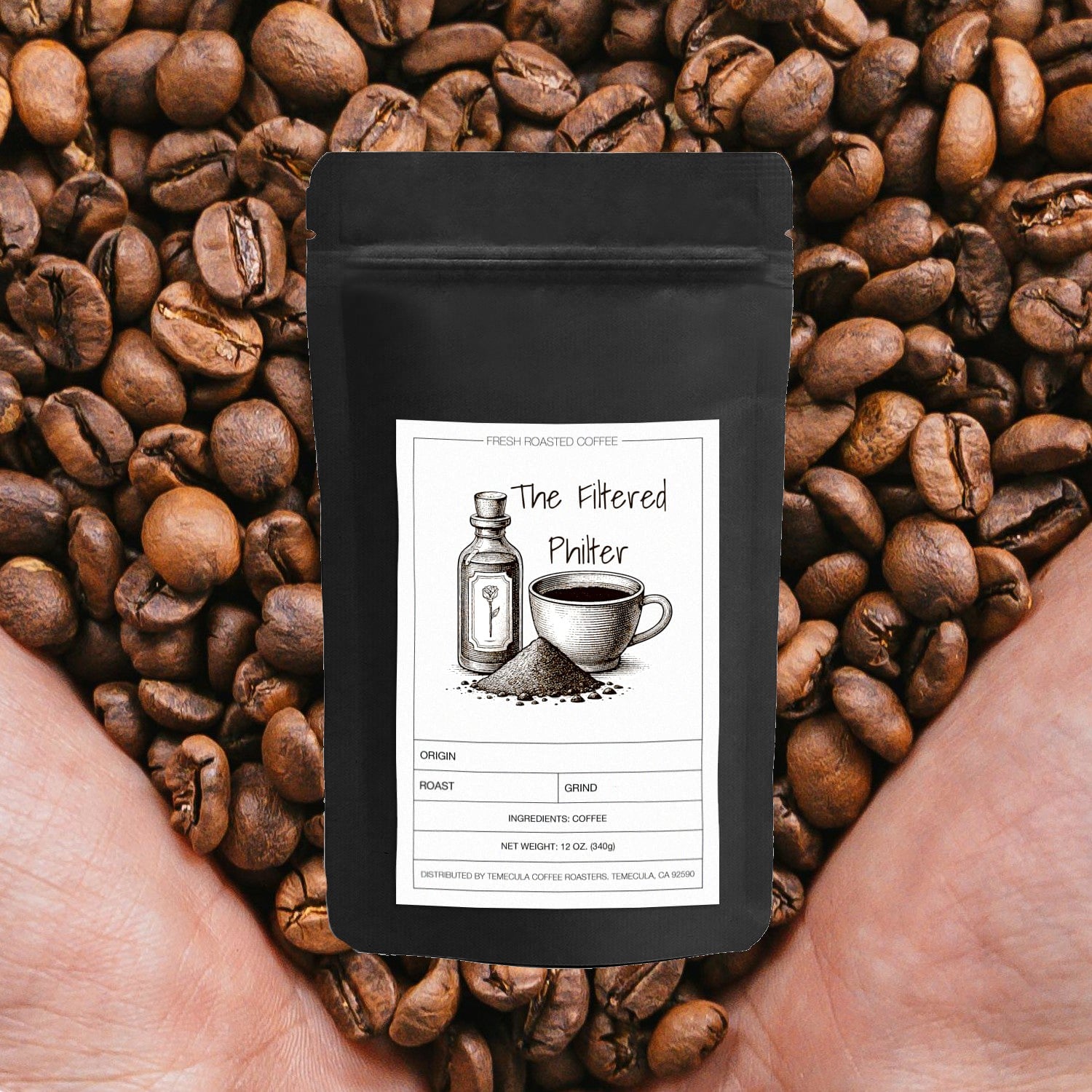
- Profile: Dark roast blend.
- Recommended Ratio: 1:15.
- Function: Provides high-density flavor for morning extraction routines.
- Link: Purchase 6 Bean Blend
3.2 Asian Plateau Blend
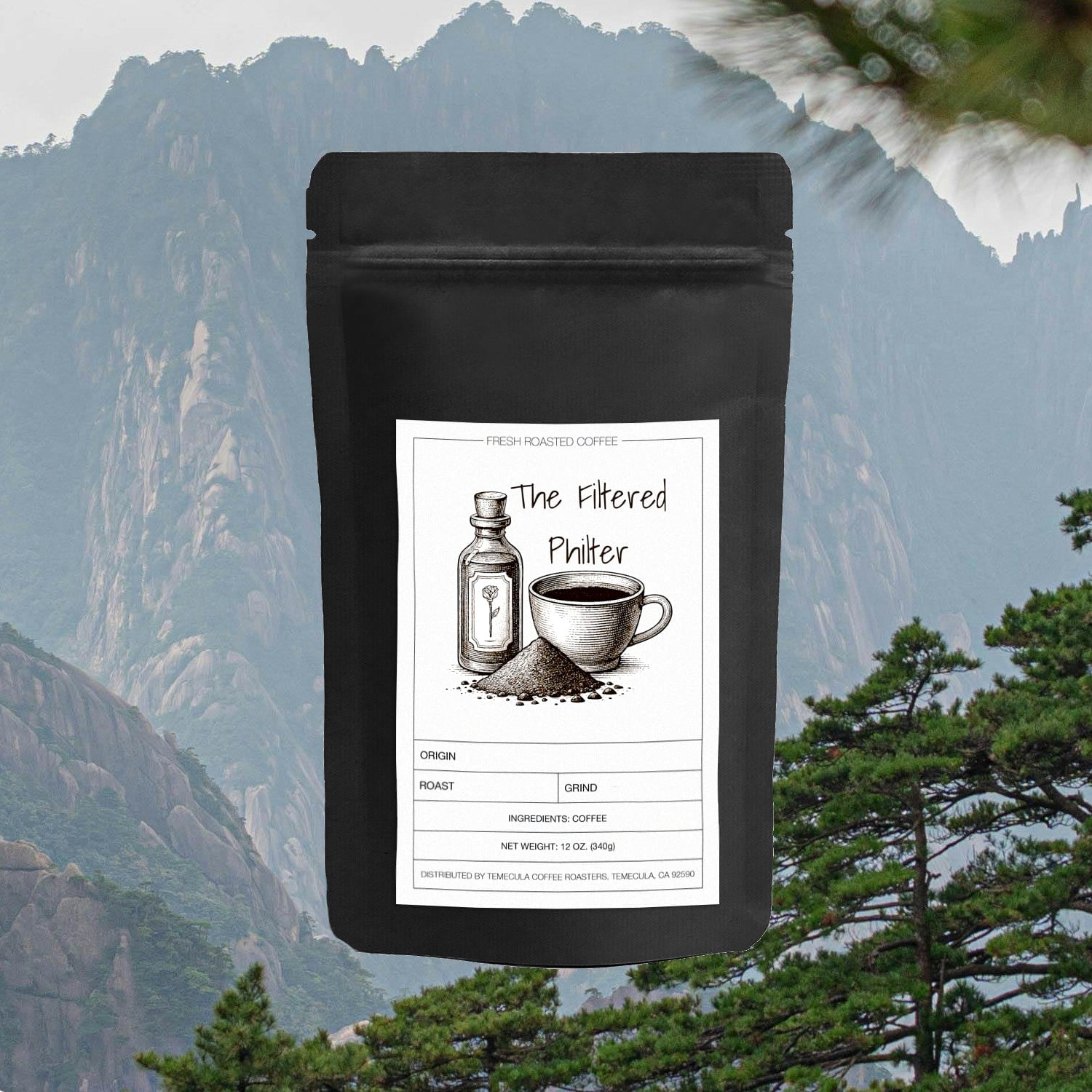
- Profile: Medium-dark roast.
- Recommended Ratio: 1:16.
- Function: Balanced extraction for mid-day focus sessions.
- Link: Purchase Asian Plateau Blend
4. Primary Parameters
| Variable | Specification |
|---|---|
| Coffee-to-Water Ratio | 1:15 to 1:17 (Standard: 1:16) |
| Grind Size | Medium-fine (Texture of table salt) |
| Water Temperature | 195°F–205°F (90°C–96°C) |
| Bloom Volume | 2x to 3x coffee weight |
| Bloom Duration | 30–45 seconds |
| Total Brew Time | 3:00–4:00 minutes |
5. Procedural Steps
Step 1: Preparation
- Heat water to 205°F.
- Insert filter into dripper.
- Rinse filter with 50ml of hot water. Discard rinse water. This removes paper residue and preheats the vessel.
- Weigh 20g of freshly roasted coffee beans.
- Grind to medium-fine specification.
- Transfer grounds to dripper. Level the bed.
Step 2: The Bloom Phase

- Start timer.
- Pour 40g of water slowly onto the center of the grounds.
- Observe the release of CO2 (bubbling).
- Wait 30-45 seconds. This step ensures even saturation and improves final extraction quality.
Step 3: Main Extraction

- At 0:45, begin the second pour.
- Pour in circular motions, starting from the center and moving outward. Avoid pouring directly onto the filter walls.
- Add water until the scale reads 160g.
- Maintain a steady, thin stream.
- At 1:30, begin the third pour. Add water until the scale reaches the final target weight of 320g (for a 1:16 ratio).
Step 4: Draw Down
- Allow the water to pass through the coffee bed.
- The bed should appear flat and glistening once the water has drained.
- Total brew time should conclude between 3:00 and 3:30.
- Remove the dripper.
6. Ritual Observation (Sensory Data)
The pour-over process functions as a meditative ritual through controlled sensory input:
- Visual: Monitor the expansion of the coffee bed and the transparency of the brew.
- Auditory: Observe the sound of the water stream and the drip into the carafe.
- Olfactory: Identify aromatic compounds released during the bloom and final draw down.
- Tactile: Maintain ergonomic grip on the kettle to ensure flow precision.
7. Troubleshooting Matrix
| Issue | Observation | Adjustment |
|---|---|---|
| Bitter Taste | Brew time > 4:00 | Coarsen grind size; lower water temperature. |
| Sour/Acidic Taste | Brew time < 2:30 | Refine grind size; increase water temperature. |
| Weak Body | Water passes too fast | Refine grind size; increase coffee dose. |
| Clogged Filter | Water stalls | Coarsen grind; check filter quality. |
8. Maintenance
- Clean all brewing equipment with hot water immediately after use.
- Use specialized coffee equipment cleaners monthly to remove oil buildup.
- Store coffee beans in airtight, opaque containers at room temperature. Freshness is prioritized.
9. Outcome
Proper execution results in a clean, high-clarity cup of coffee that highlights the specific flavor profiles of the 6 Bean or Asian Plateau blends.

0 comments