

1. Definition and Classification
Masala Chai is a spiced tea beverage originating from the Indian subcontinent. It is classified as a decoction, a method of extraction by boiling herbal or plant material to dissolve the chemicals of the material. This process differs from standard infusion or steeping, which involves pouring hot water over tea leaves.
Authentic chai brewing requires a specific sequence of boiling water, spices, black tea, and milk. The objective is to extract essential oils from spices and achieve milk caramelization. This results in a full-bodied, aromatic, and intense flavor profile.
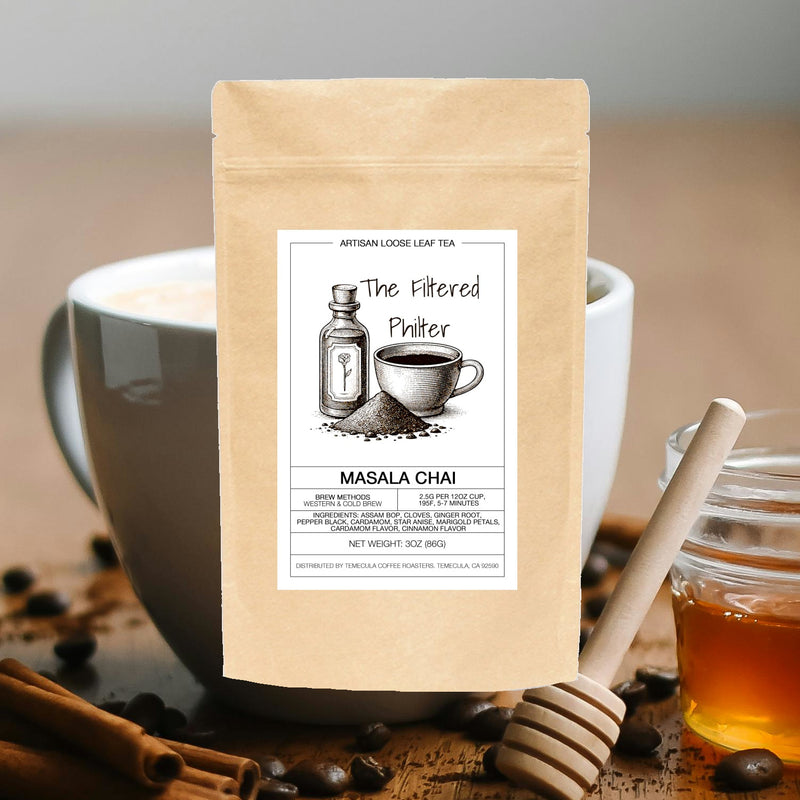
2. Product Specifications: The Filtered Philter Chai
The Masala Chai blend from The Filtered Philter is a curated loose-leaf product designed for traditional preparation.
- Product Name: Masala Chai
- Format: Loose leaf tea
- Weight: 3oz
- Price: $15.50 USD
- Characteristics: Bold, spicy, full-bodied, intense
- Application: Suitable for traditional milk-based decoction or standalone consumption
3. Technical Components
Successful preparation depends on five primary components. Each component serves a functional purpose in the final chemical and sensory composition of the drink.
3.1. Water
Water acts as the initial solvent for spice extraction. Use filtered water to prevent mineral interference with tea tannins. The standard ratio begins with 50% of the total desired volume as water.
3.2. Spices (Masala)
Spices provide the aromatic and physiological profile. The Filtered Philter blend utilizes a specific ratio of botanicals. Key spices include:
- Cardamom: Provides sweet, eucalyptus-like notes.
- Cinnamon: Adds woody sweetness and warmth.
- Cloves: Contributes intense, medicinal depth.
- Ginger: Delivers pungency and heat.
- Black Pepper: Enhances spice "bite" and bioavailability.
3.3. Tea Base
The base is a robust black tea, typically Assam. It provides the caffeine content and the tannic structure necessary to balance the fats in the milk and the intensity of the spices.
3.4. Milk
Milk provides texture and mouthfeel. Full-fat bovine milk is the traditional standard due to its protein and fat content, which undergoes caramelization during the boiling process. Non-dairy alternatives (oat or soy) may be substituted but will result in different chemical reactions during boiling.
3.5. Sweetener
Sweeteners function as flavor conductors. They reduce the perception of bitterness from tea tannins and dryness from spices. Options include white sugar, jaggery, or honey.

4. The Decoction Protocol
Follow these steps for authentic chai brewing. Total preparation time is approximately 15-20 minutes.
Step 1: Spice Extraction
Place ¾ cup of water in a saucepan. Add the Filtered Philter Masala Chai blend. If using whole spices in addition to the blend, crush them lightly to increase surface area. Bring the water to a rolling boil. Maintain the boil for 3-5 minutes to ensure maximum extraction of essential oils.
Step 2: Tea Infusion
Add 1-2 teaspoons of loose-leaf tea to the boiling spice water. Continue to simmer for an additional 2-3 minutes. The liquid should turn a deep, dark brown. This stage establishes the strength of the tea base.
Step 3: Milk Integration and Boiling
Pour in ¾ cup of milk and add the preferred amount of sweetener. Monitor the pot closely. Allow the mixture to reach a boil until it rises toward the rim of the pot. Remove from heat briefly until the liquid subsides, then return to the heat and repeat this "double-boil" process 2-3 times. This step is critical for texture and flavor integration.
Step 4: Aeration and Straining
Optional: "Pull" the chai by pouring it from a height into another vessel several times. This aerates the liquid and creates a foam. Strain the mixture through a fine-mesh sieve into a mug to remove solids.
5. Botanical Properties and Spiced Tea Benefits
The spices used in the Filtered Philter Chai blend are selected for their documented properties.
| Ingredient | Primary Compounds | Functional Benefit |
|---|---|---|
| Ginger | Gingerols, Shogaols | Supports digestive function and thermogenesis. |
| Cardamom | Cineole, Terpinene | Acts as a digestive aid and breath freshener. |
| Cinnamon | Cinnamaldehyde | Provides antioxidant properties and supports circulation. |
| Cloves | Eugenol | Offers antimicrobial and mild analgesic effects. |
| Black Pepper | Piperine | Increases the bioavailability of other nutrients. |
These spiced tea benefits contribute to a holistic beverage experience that addresses both physiological and sensory requirements.
6. Integration into Wellness Rituals
The preparation of Masala Chai serves as a functional wellness ritual. The process requires focus and sequential action, which can facilitate a transition into a productive or contemplative state.
For optimal results, consume the chai in a controlled environment. This practice aligns with the holistic approach of The Filtered Philter, combining ancient apothecary principles with modern lifestyles.

7. Comparative Analysis: Homemade vs. Concentrates
Commercial chai concentrates often contain high levels of preservatives and synthetic flavorings. They lack the complexity achieved through the stovetop decoction of loose-leaf tea. Preparing chai using the Filtered Philter blend ensures:
- Freshness of spice oils.
- Control over sweetness and milk type.
- Authentic texture through milk cooking.
8. Summary of Parameters
To achieve a consistent result, adhere to the following data points:
- Water-to-Milk Ratio: 1:1
- Tea Quantity: 2g per 100ml liquid
- Boil Time (Water/Spices): 5 minutes
- Boil Time (With Milk): 3 minutes (minimum)
- Serving Temperature: 75°C - 85°C

For more information on restorative blends, visit our Tea Collection or explore alternative options like Matcha or Apple Cider Rooibos.
0 comments