

1. Product Overview: Matcha
Matcha is a finely ground powder produced from specially grown and processed green tea leaves (Camellia sinensis). Unlike traditional tea, the entire leaf is consumed, resulting in a higher concentration of bioactive compounds.
Product Specifications:
- Product Name: Matcha
- Retail Price: $18.50
- Form: Powdered concentrate
- Primary Use: Cognitive enhancement and energy regulation
- Inventory Status: Available via The Filtered Philter Teas Collection
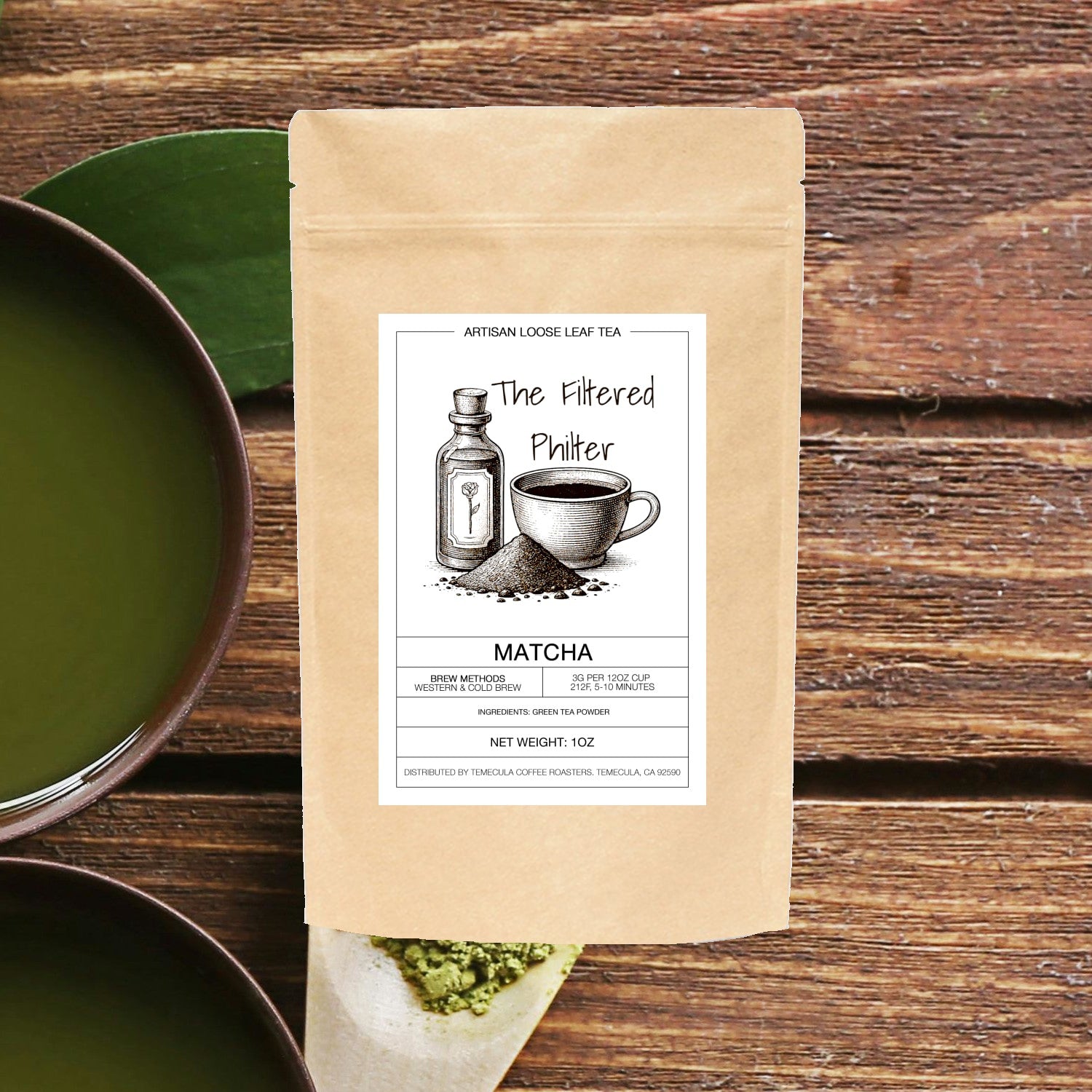
2. Technical Analysis: The L-theanine and Caffeine Synergy
The efficacy of Matcha as a focus-enhancing beverage is derived from the biochemical interaction between two primary compounds: Caffeine and L-theanine.
2.1 Caffeine Functionality
Caffeine acts as a central nervous system stimulant. It binds to adenosine receptors in the brain, preventing the onset of drowsiness.
- Stimulation onset: 15–45 minutes post-ingestion.
- Duration: Variable based on metabolic rate.
- Potential side effects: Jitters, increased heart rate, and acute energy depletion (crash).
2.2 L-theanine Functionality
L-theanine is an amino acid that promotes relaxation without sedation. It crosses the blood-brain barrier and influences neurotransmitter levels.
- Primary Mechanism: Increases alpha brain wave activity.
- Result: Induction of a state described as 'calm alertness'.
- Modulation: Attenuates the vasoconstrictive effects of caffeine.
2.3 Synergistic Impact
The combination of L-theanine and Caffeine in Matcha results in a regulated release of energy. Research indicates that this synergy improves:
- Selective attention: Enhanced ability to filter out distractions.
- Working memory: Improved data retention during complex tasks.
- Reaction time: Decreased latency in cognitive processing.
- Sustained focus: Energy levels remain stable for 3–6 hours.
3. Comparative Data: Matcha vs. Standard Coffee
A technical comparison of energy delivery systems.
| Feature | Matcha | Standard Coffee |
|---|---|---|
| Energy Curve | Stable, linear decline | Sharp peak, rapid drop |
| Alertness Type | Calm, focused | Stimulated, nervous |
| Crash Potential | Low | High |
| Preparation Ritual | Required (Whisking) | Variable (Drip/Press) |
| Antioxidant Content | High (Catechins/EGCG) | Moderate |
| Breath Impact | Neutral | Often negative |
4. Operational Procedure: The Monday Morning Routine
To achieve maximum focus on Monday mornings, follow these established protocols.
Step 1: Rehydration
Initiate hydration immediately upon waking.
- Input: 250ml warm water.
- Goal: Counteract overnight dehydration and activate digestive systems.
Step 2: Physical Activation
Execute 5–10 minutes of low-intensity movement.
- Examples: Stretching, joint rotation, or light walking.
- Purpose: Increase blood flow and alleviate musculoskeletal stiffness.
Step 3: Matcha Preparation (Brewing Protocol)
Precision in preparation is required to prevent bitterness and ensure optimal extraction of compounds.
- Sifting: Pass 1–2 tsp of Matcha powder through a fine-mesh sieve into a ceramic bowl.
- Hydration: Add 30ml of water. Temperature must be between 70°C and 85°C. Do not use boiling water.
- Emulsification: Use a bamboo whisk (chasen) to mix the powder and water into a smooth paste.
- Aeration: Add 150ml of additional hot water. Whisk in a 'W' or 'M' motion until a consistent foam layer forms.

Step 4: Strategic Planning Block
Consume the beverage while performing weekly administrative planning.
- Task 1: Identify top 3 priorities for the day.
- Task 2: Outline top 3 objectives for the week.
- Task 3: Allocate time blocks for 'Deep Work' sessions.
- Environmental Note: This phase should be executed in a low-distraction environment to facilitate the onset of the L-theanine/Caffeine synergy.

Step 5: First Deep-Work Sprint
Upon completion of the beverage, transition immediately into the highest priority task.
- Duration: 60–90 minutes.
- Parameters: No external communications (Email, SMS, Slack).
- Focus: Sustained cognitive engagement on a single output.

5. Alternative Product Options
For variations in flavor profile or supplemental benefits, consider the following tea and coffee blends from the inventory.
5.1 Roasted Tea Options
- Hojicha: A roasted green tea with lower caffeine content. Suitable for late-morning consumption.
- Masala Chai: A blend for warming properties and metabolic support.
5.2 Coffee-Based Alternatives
For users preferring coffee delivery systems, the following are available:
- 6 Bean Blend: Optimized for high-performance mornings. See the guide on unlocking the power of the 6 bean blend.
- African Kahawa Blend: Traditional roast profile for intensive energy requirements.
- Asian Plateau Blend: Smooth finish for sustained morning tasks.
5.3 Herbal Support
- Apple Cider Rooibos: Caffeine-free option for recovery or afternoon focus without sleep disruption.
6. Technical Summary
Matcha provides a biologically superior method for Monday morning energy management compared to standard caffeinated beverages. The presence of L-theanine modulates the stimulatory effects of caffeine, resulting in improved cognitive performance and a reduced risk of energy volatility.
System Requirements for Implementation:
- Filtered Philter Matcha
- Accurate water temperature control (70°C–85°C)
- Aeration tool (Whisk)
- Minimalist workspace
For further information on integrating wellness into morning routines, refer to our guide on wellness-boosting coffee at home or explore mushroom coffee benefits.
0 comments