

Technical Definition: Roasted-to-Order Coffee
Roasted-to-order coffee refers to a production model where coffee beans are roasted only after a customer transaction is completed. This differs from inventory-based retail models where coffee is roasted in bulk, packaged, and stored in warehouses or on retail shelves for indeterminate periods.
The primary objective of the roasted-to-order system is to minimize the time elapsed between the roasting process and the point of consumption. This model ensures that the chemical compounds responsible for flavor and aroma remain at peak concentration when the product reaches the end user.
Comparison Table: Roasted-to-Order vs. Commodity Coffee
| Feature | Roasted-to-Order | Commodity / Store-Bought |
|---|---|---|
| Roast Date | Within 24-48 hours of shipping | Often 30-180 days prior to purchase |
| Aromatic Compounds | 90-100% retained at delivery | 40-60% loss typical due to oxidation |
| Carbon Dioxide Content | High; requires degassing | Minimal; beans are often "flat" |
| Packaging | Valve-sealed bags | Vacuum-sealed or standard bags |
| Flavor Profile | Complex, origin-specific notes | Muted, often dominated by roast level |
The Chemical Process of Coffee Freshness
Coffee freshness is a measurable state of chemical stability. Upon the completion of the roasting process, several biochemical changes occur within the bean structure.
Volatile Organic Compounds (VOCs)
Coffee contains over 800 volatile compounds. These include esters, aldehydes, and ketones. These compounds begin to dissipate immediately after the roasting process. Research indicates that up to 60% of these aromatics are lost within the first two weeks post-roast if the beans are not properly handled.
Lipid Oxidation
Coffee beans contain lipids (oils). Exposure to oxygen initiates oxidation. This process breaks down lipids into fatty acids, leading to rancidity. Roasted-to-order coffee limits oxygen exposure duration by reducing the time the beans spend in transit and storage.
Degassing: The Scientific Mechanism
Degassing is the release of carbon dioxide (CO2) gas that has been trapped inside the coffee bean during the roasting process. This is a critical phase for flavor development.

CO2 Release Timeline
- Hours 0-24: Rapid CO2 release. Brewing during this window results in excessive "bloom," which can impede water contact with coffee grounds.
- Days 2-7: Optimal degassing for filter coffee. Gas levels stabilize.
- Days 7-14: Optimal for espresso. Espresso extraction requires lower CO2 levels to prevent crema instability and sourness.
The "Bloom" Phenomenon
When hot water is applied to fresh coffee, the remaining CO2 is rapidly expelled. This creates a foaming effect known as the bloom. In roasted-to-order coffee, the bloom is highly visible. In older commodity coffee, the bloom is minimal or absent, indicating the loss of gas and associated volatile oils.
Coffee Bean Storage Specifications
To maintain the integrity of roasted-to-order coffee, environmental factors must be controlled. There are four primary catalysts for coffee degradation: oxygen, light, heat, and moisture.

Storage Requirements
- Oxygen Control: Use airtight containers. Oxygen accelerates the oxidation of coffee oils.
- Light Exposure: Use opaque containers. UV light degrades organic compounds through photodegradation.
- Temperature Stability: Store at room temperature (approximately 20°C / 68°F). Avoid storage near heat sources like ovens or windows.
- Moisture Prevention: Keep in a dry environment. Humidity can lead to mold growth and cellular breakdown of the bean.
Recommended Containers
- Air-Displacement Canisters: These containers allow the user to push air out, minimizing the head-space oxygen.
- One-Way Valve Bags: These allow CO2 to escape while preventing O2 from entering.
- Vacuum-Sealed Glass (Opaque): Suitable for long-term storage of whole beans.
Product Analysis: The Filtered Philter Selection
Freshness is particularly important for complex blends and high-altitude single-origin coffees. The following products are roasted to order to preserve specific flavor profiles.
African Kahawa Blend
The African Kahawa Blend is a medium-dark roast utilizing beans grown in Africa.
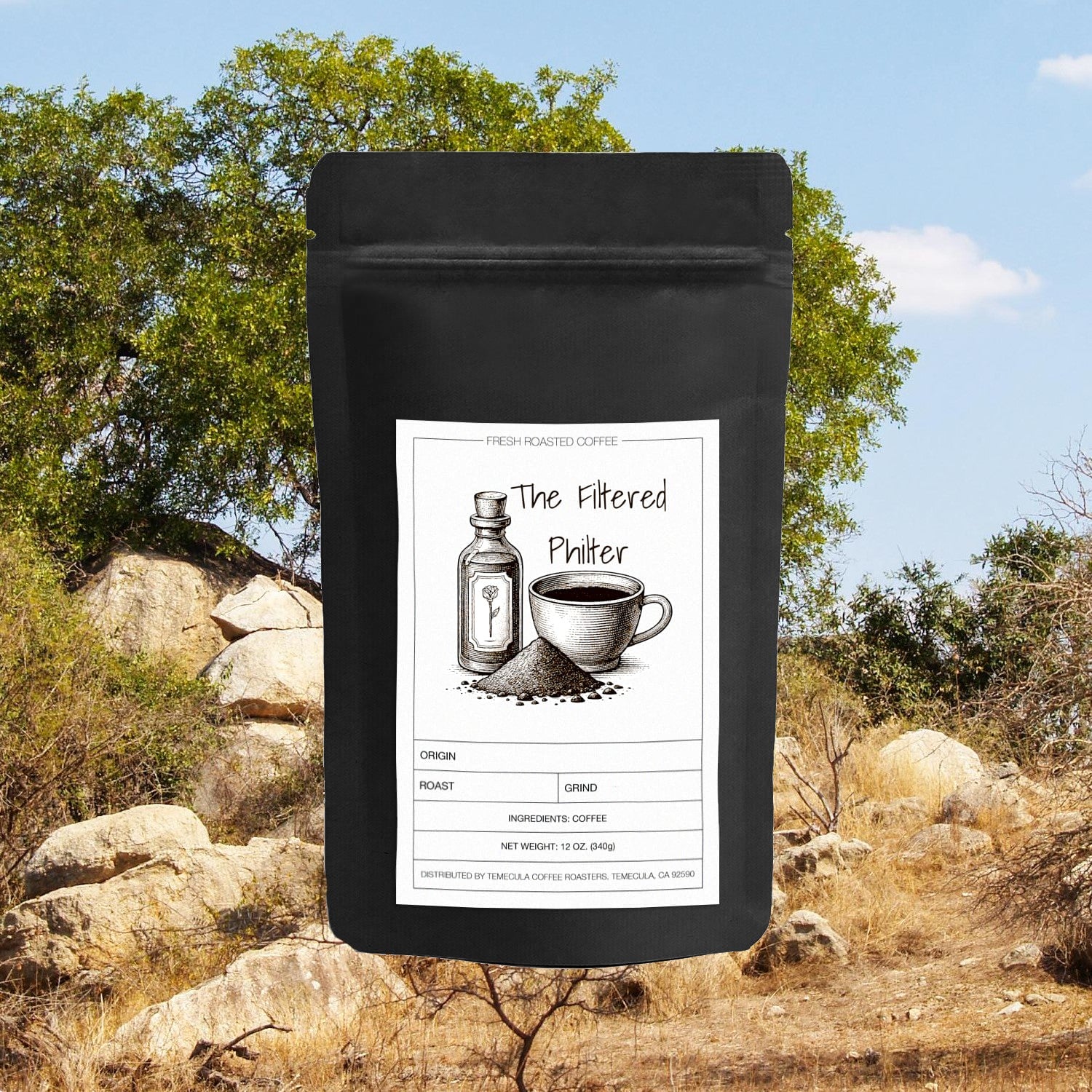
- Flavor Profile: Toffee, caramel, chocolate, green apple, and black currant.
- Significance of Freshness: The bright acidity (green apple, cherry) and floral finish of African coffees are highly volatile. Fresh roasting ensures these delicate notes are not lost to oxidation.
- Processing: Environmentally friendly washing and sun drying.
6 Bean Blend
The 6 Bean Blend is a dark roast designed for espresso applications.
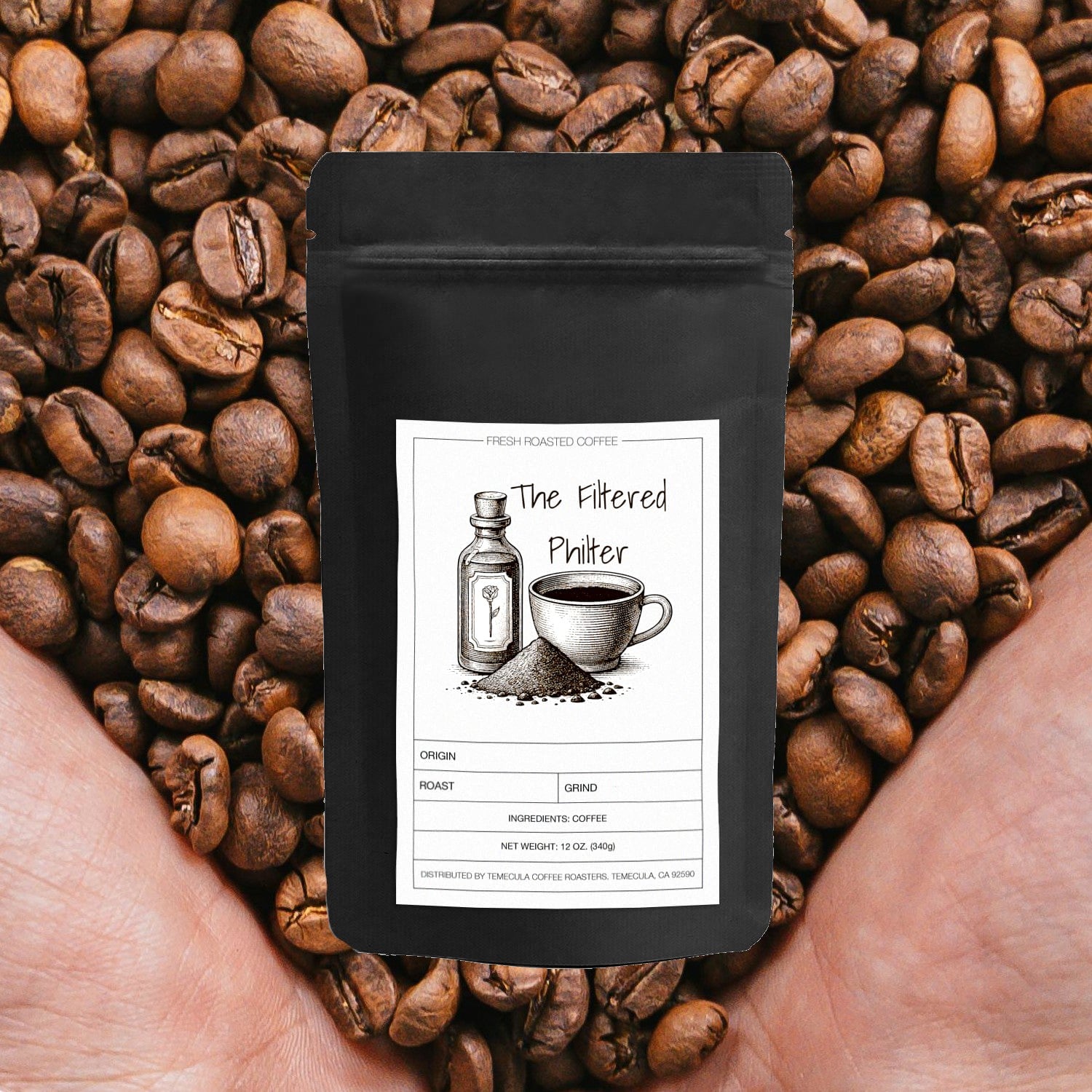
- Flavor Profile: Intense, smokey, and rich.
- Significance of Freshness: Dark roasts have more surface oils. These oils oxidize faster than those in light roasts. Ordering a dark roast as "roasted-to-order" is essential to avoid the rancid flavors associated with aged dark roasts.
- Application: Optimal for traditional espresso and milk-based beverages.
Best Practices for Brewing Fresh Coffee
To maximize the benefits of roasted-to-order coffee, follow these technical guidelines:
Grinding Protocol
- Time: Grind immediately before brewing. The surface area of coffee increases exponentially once ground, leading to total oxidation within 20-30 minutes.
- Burr Grinders: Use burr grinders instead of blade grinders to ensure uniform particle size.
-
Size Calibration:
- Coarse: French Press / Cold Brew.
- Medium: Drip / Pour-over.
- Fine: Espresso.
Water Quality and Temperature
- Filtration: Use filtered water. High mineral content or chlorine will distort the flavor of fresh beans.
- Temperature: Maintain water between 90.5°C and 96°C (195°F - 205°F). Water above boiling (100°C) can cause over-extraction and bitterness.
Ratio Measurement
Utilize a digital scale for precision. A standard ratio is 1:16 (1 gram of coffee to 16 grams of water).
Summary of Shelf Life Data
| Time Since Roast | Status | Characteristics |
|---|---|---|
| 0-48 Hours | Degassing Phase | High CO2; potentially uneven extraction. |
| 3-14 Days | Peak Freshness | Maximum aromatic intensity and flavor clarity. |
| 15-30 Days | Stable Phase | Noticeable decline in delicate top notes; still high quality. |
| 30-60 Days | Degraded Phase | Muted flavors; increased woody or flat notes. |
| 60+ Days | Stale | Potential for rancid oil flavors; minimal aroma. |
FAQ: Common Freshness Inquiries
Does coffee expire?
Coffee does not "expire" in a way that causes immediate illness, but it becomes "stale." Stale coffee loses its flavor complexity and develops a flat, bitter, or paper-like taste.
Can I freeze coffee beans?
Freezing is only recommended for long-term storage (over 4 weeks) if the beans are in an airtight, vacuum-sealed container. Frequent removal from the freezer causes condensation, which ruins the beans.
Why does my coffee taste sour?
If the coffee is fresh (less than 48 hours post-roast), the sourness may be due to trapped CO2. If the coffee is older, sourness may indicate under-extraction during brewing.
What is the benefit of a 6-bean blend over a single origin?
Blends like the 6 Bean Blend provide a consistent, balanced flavor profile by combining different regional characteristics, whereas single origins highlight the unique terroir of one location.
For more information on wellness-focused brewing, view our guide on how to make the perfect wellness-boosting coffee at home.
0 comments